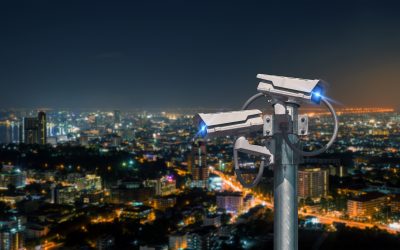
An intelligent video surveillance system is a camera network that does more than record footage. It analyses what it sees against defined rules, identifies events that matter, and sends meaningful alerts so people can respond faster and more accurately. Standard CCTV is a passive witness. Intelligent video surveillance, often shortened to IVS, is a witness with instructions, context and a direct line to action.
The difference matters because most security incidents do not start dramatically. A person lingering near a loading dock after hours, a vehicle entering through the wrong gate, or someone moving against customer flow in a restricted corridor can all look harmless for the first few seconds. A traditional CCTV system records it for later review. An intelligent video surveillance system flags it immediately, so action can start while the event is still unfolding. For Brisbane homes, offices, warehouses, retail tenancies and strata properties, that shift from passive record to active alert is what separates modern surveillance from a basic camera install.
How does an intelligent video surveillance system work?
An intelligent video surveillance system works by capturing a scene, analysing behaviour against defined rules, storing relevant footage, and pushing high-value alerts into a clear response process. Cameras collect visual data. Analytics software interprets movement, objects and behaviour against the rules set for the site. Recorders, edge devices or cloud platforms store the data, and the system pushes a notification, monitoring centre alert, audio challenge or linked alarm event when something matches the rule.
Three practical insights shape system performance. Detection quality starts in the physical world, not on a brochure: poor lighting, glare, unstable mounting and incorrect field of view create false alarms and missed events. Analytics should reflect how the site is actually used, since a car park with late-night deliveries needs different rules from a gated residential entry. Action pathways must be clear, because an alert that fires with no one assigned to assess it has not solved the problem.
The core components of an IVS setup
An intelligent video surveillance system combines five working parts: cameras and lenses for image capture, analytics software for interpretation, processors at the edge or in the cloud, storage for footage and metadata, and a defined response workflow that turns alerts into action. The system only becomes intelligent when these pieces are linked by logic and supported by a clear response plan.
Cameras and lenses are the eyes. The real performance question is not how many cameras are installed, but whether each one captures the right detail from the right angle under real operating conditions. Resolution matters, but placement matters more. A well-positioned camera with a suitable lens will outperform a higher-spec device mounted in the wrong spot.
Analytics is the interpretive layer. Modern IVS analytics distinguish humans and vehicles from animals, foliage and weather, apply rules to specific zones rather than the whole image, and run on schedules so alerts match the site’s risk profile. Storage and response complete the system. Searchable metadata means an investigator can find the relevant clip in seconds rather than scrubbing hours of recording, and a clear escalation path ensures alerts reach the right person.
Where the analytics actually run
Analytics processing happens in one of three places: on the camera itself (edge processing), on a recorder or server inside the building, or in a cloud platform. Each approach has trade-offs. Edge processing keeps detection fast and reduces network load, but limits how much rule complexity the camera can handle. Server-based analytics suit larger sites because the processing can be centralised across many cameras. Cloud-based analytics support remote management and easier multi-site oversight, but depend on stable connectivity and clear data handling under Australian privacy obligations.
The right architecture is rarely one option in isolation. Many Brisbane sites use a blend, with edge analytics handling perimeter detection at individual cameras and cloud platforms providing centralised oversight, multi-site dashboards and remote search.
What are the features of intelligent video surveillance?
Intelligent video surveillance features are designed to detect, interpret, deter and inform. They turn camera footage from a passive record into an active source of operational data. The strongest deployments use a focused set of features tuned to the site, not every feature available in the platform.
- Motion classification: separates humans and vehicles from animals, foliage and weather to reduce false alarms.
- Virtual tripwires and intrusion zones: trigger alerts when a person or vehicle crosses a defined line or enters a marked area.
- Loitering detection: flags a person remaining in a defined zone longer than a set time, useful at ATMs, loading docks and side entries.
- Object left or removed: identifies abandoned items in public areas, or removal of items from a designated space.
- People counting and queue analytics: supports retail loss prevention, occupancy management and congestion monitoring.
- Licence plate recognition: identifies vehicles entering a car park, gate or loading area, with logs that can integrate with access control.
- Audio analytics: detects glass break, raised voices or other sounds that warrant an alert.
- Two-way audio and live audio challenge: enables operators or owners to issue a verbal warning when an event is detected.
Not every site needs every feature. A childcare centre may prioritise gate monitoring and after-hours perimeter alerts. A medical facility may focus on restricted access zones and visitor movement. A body corporate may need car park monitoring, lift lobby visibility and remote verification before dispatching a patrol. The smartest systems are often the simplest because they are tuned to actual risk.
What are the benefits of an IVS for homes and businesses?
The benefits of an intelligent video surveillance system fall into five practical areas: earlier threat detection, fewer false alarms, better visibility across single and multi-site operations, faster investigations through searchable footage, and a reliable layer of protection when staffing is limited. The combined effect is a system that helps people act sooner with better information, rather than reviewing damage the next morning.
Earlier detection changes the outcome. If an intruder is identified while approaching a loading dock rather than after forcing entry, there is time to intervene. If a person enters a common area after curfew at a residential complex, monitoring staff can assess the risk immediately. If suspicious movement is detected around a home perimeter, the owner can verify the alert and act before a break-in progresses. Industry research consistently shows that visible surveillance and monitored alarm integration reduce both the likelihood and duration of unlawful entry.
Reducing false alarms is the other major operational gain. A well-configured IVS distinguishes meaningful activity from background movement, so monitoring operators, managers and property owners focus on verified events. When people trust the alerts, they act on them quickly. A commercial yard that previously generated multiple alerts overnight from lighting changes and weather can be configured to trigger only when a person or vehicle enters a defined zone. That single change transforms confidence in the system.
Intelligent video surveillance vs traditional CCTV: what is the difference?
Traditional CCTV captures footage. Intelligent video surveillance captures footage and interprets activity. That one shift changes everything about how the system performs in the real world. CCTV is reactive: someone reviews the footage after an incident. IVS is event-based: the system detects the intrusion as it happens and triggers a response pathway through push notifications, monitoring escalation, audio challenge, lighting activation or guard dispatch.
| Factor | Traditional CCTV | Intelligent video surveillance |
|---|---|---|
| Primary function | Continuous or motion-triggered recording for later review | Real-time analysis with rule-based alerts |
| Alert quality | High volume, low specificity (every motion event) | Filtered to humans, vehicles, defined zones and schedules |
| Best use case | Evidence after the fact, basic deterrence | Prevention, early intervention, operational oversight |
| False alarm rate | High in weather, low-light or wildlife-prone sites | Significantly lower when configured to site conditions |
| Footage review | Manual scrubbing through hours of recording | Searchable metadata: filter by time, zone, object type |
| Response time | Often hours or days after the event | Seconds to minutes during the event |
Traditional CCTV still has value for evidence gathering and basic deterrence in lower-risk environments. Once a property has recurring after-hours activity, multiple entry points, public access zones, vehicle movements or compliance obligations, passive video alone starts to show its limits.
Where intelligent video surveillance works best
Intelligent video surveillance delivers the strongest return at sites with mixed permission levels, after-hours risk, and limited staff presence. The pattern across all of them is the same: an unattended environment where early detection changes the outcome.
- Retail and hospitality: stockroom protection, after-hours arming, queue analytics and loss prevention around entry and exit behaviour.
- Industrial sites, warehouses and logistics: perimeter detection, vehicle classification at gates, loading dock monitoring and intrusion alerts on restricted areas.
- Strata, multi-tenant residential and mixed-use developments: car park monitoring, lift lobby visibility, common area oversight, and remote verification before dispatching a patrol.
- Healthcare, aged care and high-traffic public environments: entry monitoring, restricted area alerts, and resident safety oversight that supports staff without interfering with care.
- Schools and education: gate monitoring, after-hours community-space coverage, and fast incident verification.
- Construction sites and temporary deployments: rapid-deployment cameras for sites with changing layouts, theft of tools and materials, and contractor activity verification.
For Brisbane properties, environmental conditions also shape design. Subtropical storms, heat, humidity, reflective surfaces, vegetation movement and headlight wash can all affect detection if the system is not designed for local conditions. Camera selection, mounting, analytics tuning and maintenance all need to account for the site as it actually operates, not as it appears in a floor plan.
What to look for when choosing an IVS
The best IVS buying decision balances present needs with future adaptability. The system should expand logically as the property changes, integrate with existing security infrastructure, perform consistently under local environmental conditions, and stay maintainable over a working life of 8 to 12 years. The questions worth asking up front shape every other decision.
- What specific risks does the system need to address? Perimeter trespass, after-hours intrusion, internal theft, vehicle activity, restricted area access, or public-area incidents.
- How will the system integrate with alarms, access control, intercoms and monitoring? Standalone IVS protects much less than IVS connected to a wider response framework.
- Can the system scale? Adding cameras, sites or analytics later should be a configuration task, not a hardware replacement.
- What does the response workflow look like? Push notifications alone are rarely enough for commercial sites. Monitored response, escalation procedures and patrol dispatch matter.
- How does the provider handle commissioning and maintenance? Analytics need tuning after install, and quarterly or half-yearly reviews keep the system reliable as the site evolves.
The strongest indicator of a capable provider is clarity. They should explain the analytics in plain terms, walk through what happens during an incident, and show how the system handles the realistic risks for the property. If a quote skips the site assessment and arrives with a generic camera count, the proposal is guessing.
Common challenges that affect IVS performance
Most IVS performance problems are not caused by the analytics. They come from poor commissioning, inadequate maintenance, or attempts to apply intelligent analytics to camera infrastructure that cannot support them.
- Poor commissioning: rules set with default sensitivity, no test-and-tune phase, and no documentation of why each zone is configured the way it is.
- Drift over time: cameras that worked perfectly at install can develop blind spots when vegetation grows, lighting changes, or site layout shifts. Without scheduled review, drift becomes hidden failure.
- Inadequate lighting: analytics rely on usable visual data. A perimeter that looks fine to the eye may still be too dark for reliable detection. Good lighting is part of the security strategy, not an afterthought.
- Mismatched hardware: trying to run advanced analytics on cameras with low resolution, poor low-light performance or unsuitable field of view produces unreliable results. The analytics get blamed for hardware limitations.
- Weather and environment: Brisbane storms, heat, humidity and reflective surfaces all affect performance if cameras are not specified and housed for local conditions.
- No defined response: even the best alert is useless if no one is assigned to assess it. The workflow matters as much as the technology.
The fix in every case is discipline. Commission properly, document the rules, test after install, and review the system on a schedule. Intelligent analytics are not set-and-forget technology. They need structured commissioning, documented testing and planned maintenance to stay reliable.
How IVS works with monitored security services
An intelligent video surveillance system delivers its strongest result when paired with monitored security services. The system identifies events. The monitoring centre assesses them, follows agreed response procedures, and decides whether to issue an audio warning, contact a keyholder, escalate to patrol attendance, or refer the matter to emergency services. Without that layer, alerts can pile up unactioned, especially overnight and on weekends.
Monitored response also closes the verification gap. Operators can review the linked camera view at the moment the analytic fires, confirm whether the event is genuine, and avoid the cost of dispatching a patrol to a possum. For sites that previously suffered nuisance dispatches, that verification step reduces both false-alarm costs and response fatigue. A verified alert is only useful if it leads to a defined action, so the strongest deployments specify the monitoring workflow at the design stage, not as an afterthought.
Privacy, signage and compliance in Australia
Surveillance in Australia must be purposeful, proportionate and properly managed. Under the Privacy Act 1988 and the Australian Privacy Principles, organisations need to collect surveillance footage in ways that are reasonably necessary for the security purpose, with clear retention settings, controlled access to recordings, and a documented reason for use. State-based workplace surveillance laws also affect how monitoring can be conducted in employee areas, and the rules vary by state.
Signage is the practical compliance baseline. Clear notices at site entries and within monitored areas inform staff, visitors and the public that surveillance is in operation. Beyond signage, governance matters: who can access recordings, how long footage is retained, when it is shared with police or insurers, and how biometric data is handled if facial recognition is used. A compliant, well-signposted and carefully governed IVS is operationally smarter as well as legally safer, because the same controls that protect privacy also limit the chance of footage being mishandled in an incident.
Trends shaping intelligent video surveillance in 2026
Three trends are reshaping intelligent video surveillance in 2026: deeper edge processing, cloud-managed multi-site platforms, and analytics tuned to specific industries rather than generic motion detection. Together they are making IVS more selective, more connected and more efficient.
Edge processing is moving more analytics onto the camera itself, which keeps detection fast even when network connectivity is unreliable. Cloud platforms are reducing the on-site server footprint, supporting multi-site dashboards, and making firmware updates and feature improvements continuous rather than capital projects. Industry-specific analytics are replacing one-size-fits-all motion detection, with rules tuned for retail loss patterns, healthcare visitor flow, warehouse perimeter risk and construction site theft. The combined effect is systems that help operators act faster, manage sites with more confidence, and avoid the drag of outdated, hardware-heavy surveillance.
Frequently asked questions
Can IVS detect intruders before a break-in occurs?
Yes, in many cases. An intelligent video surveillance system uses analytics such as virtual tripwire detection, intrusion zone monitoring, loitering alerts, and human or vehicle classification to identify suspicious behaviour in real time. For a warehouse, that might mean detecting someone entering a fenced loading zone before they reach the building. For a home, it could mean an alert when a person enters the front yard late at night rather than waiting until a door is forced. IVS does not predict intent, but it identifies patterns that match pre-set rules, and the quality depends on camera placement, lighting and proper site configuration.
Does intelligent video surveillance work at night?
Yes, when the right camera technology and site design are in place. Night performance depends on three factors: suitable low-light camera capability such as infrared or starlight sensors, either ambient or purpose-built illumination, and analytics tuned for the environment. Modern IVS cameras maintain detection in poor lighting by distinguishing people and vehicles from background movement after dark. Heavy rain, fog, poor camera angles and strong backlighting can still reduce effectiveness, which is why lighting should be treated as part of the security strategy rather than an afterthought.
Can IVS reduce false alarms caused by animals or weather?
Yes. One of the strongest reasons to move to intelligent video surveillance is the reduction in nuisance alerts. The system analyses what moved, where it moved, and how it behaved, so a possum on a fence or a branch swaying in a storm does not trigger the same response as a person crossing a boundary. Human and vehicle filtering, zone-specific rules, and scheduled alert windows all reduce noise dramatically. False alarms are reduced, not eliminated, so commissioning and ongoing tuning still matter.
Is IVS suitable for small businesses and residential properties?
Yes. The technology has become scalable enough that small cafés, medical clinics, small warehouses and individual homes can deploy IVS economically. For small businesses, IVS is often one of the smartest security investments because owners cannot be everywhere at once. A café owner gets an alert if someone enters through a rear service door after hours; a homeowner gets an alert when a person enters the driveway after midnight, but not for every car that passes the front gate. The system suits smaller properties when it solves a specific operational problem, not when it is installed as a generic bundle.
Can existing CCTV cameras be upgraded with intelligent analytics?
Sometimes, depending on the age, resolution and architecture of the existing system. There are three upgrade paths: adding analytics through a compatible recorder or video management platform, replacing selected cameras with IVS-capable models while retaining the rest, or running a staged migration starting with the highest-priority areas. Whether an upgrade is viable comes down to image resolution, frame rate, field of view, network capacity, and compatibility with modern analytics software. A blurry camera mounted too high is a poor candidate for intelligent detection, even if it still records video.
How much does an intelligent video surveillance system cost in Australia?
Cost varies widely because it is shaped by the number of cameras, the level of analytic capability, storage retention, integration with alarms and access control, and whether monitoring is included. A smaller residential or small business setup with basic analytics across a few key points is relatively modest. A larger commercial site with perimeter coverage, monitored alerts, network upgrades and access control integration is a much higher investment. The most reliable way to budget is through a site assessment that identifies the actual risks and outcomes, rather than working from a generic price guide.
Is intelligent video surveillance worth it?
Intelligent video surveillance is worth the investment for any property where early detection, reduced false alarms and faster response have measurable value. That includes most commercial sites with after-hours risk, multi-tenant residential properties, healthcare facilities, education sites and growing small businesses. For lower-risk homes with predictable activity patterns, the case is less clear-cut, and a well-specified standard CCTV setup may still be the right choice.
The strongest investments are rarely the ones with the lowest invoice. They are the ones that reduce friction, sharpen response, and protect the site in ways basic recording never could. Pacific Security Group designs, installs and monitors intelligent video surveillance systems for Brisbane homes, offices, healthcare practices, warehouses and strata properties, with integrations across access control, intercoms, alarms and monitored response. Every assessment starts with the property: entry points, occupancy patterns, risk profile and future plans. For a site assessment or an upgrade discussion, get in touch with the team for a tailored design that fits the way the property is actually used.
Written by Sam Hayes
Details provided in this article are subject to change over time. Pacific Security Group is not liable for any errors, omissions, or updates that may affect accuracy.